
Family guide
Music Therapy for Kids in Victoria: A Supportive Way to Connect, Communicate and Grow
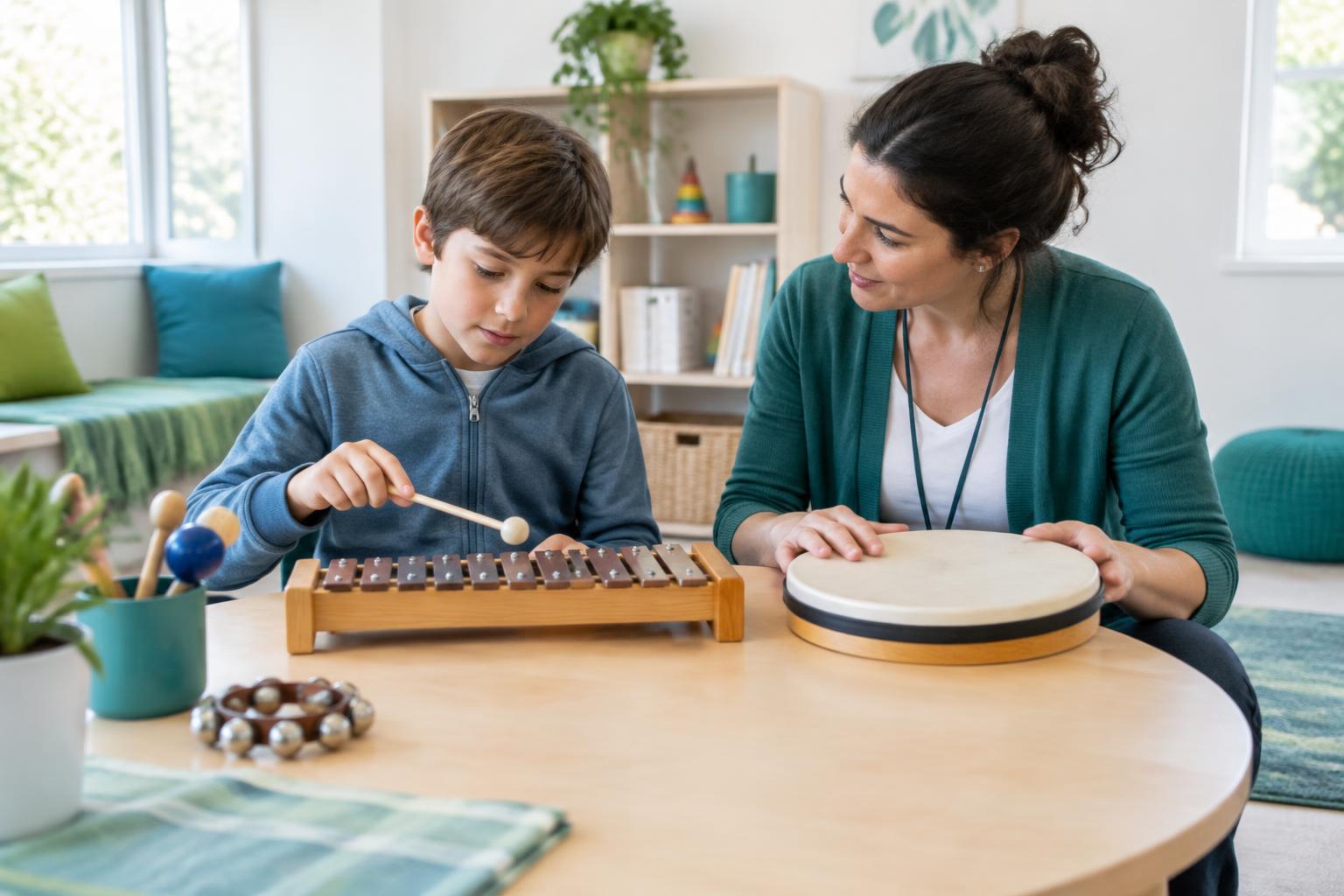
Every child has their own way of experiencing the world. Some children find it easier to express themselves through movement, rhythm or a favourite song than through conversation. Others may enjoy predictable musical patterns, exploring instruments or sharing a playful activity with a trusted adult.
Music therapy for kids uses music intentionally within a therapeutic relationship to work towards goals that matter to the child and family. For Victorian families exploring child-development support, it may be one option to discuss with a qualified music therapist.
Music therapy is not about teaching a child to perform, sing in tune or become a musician. A child does not need musical ability to participate. Activities are planned around their interests, strengths, communication style and individual goals.
Families in Melbourne and across Victoria can use this guide to understand what music therapy may involve, what to ask a provider, and how to explore an appropriate service.
What is music therapy for children?
Music therapy is the purposeful use of musical experiences by a qualified music therapist to support agreed therapeutic goals. Depending on a child's needs, a session may include singing, rhythm games, instrument play, movement, listening, improvisation or creating songs together.
The therapist and family identify goals and review progress over time. Goals might relate to interaction, communication, emotional expression, participation or other functional needs. The right approach depends on the individual child; there is no single activity or outcome that suits every family.
This is different from a general music lesson. The focus is not on learning an instrument or mastering a performance. Instead, music becomes a way to engage, practise skills and build connection in a supported setting.
Music therapy for autism: following a child's interests
Parents searching for music therapy for autism may be looking for ways to support connection, shared attention, turn-taking, communication or participation. Music can offer a structured but flexible way to explore these experiences.
For example, a therapist might pause during a familiar song to create an opportunity for a child to signal "more"; take turns making sounds on instruments; or adapt a rhythm game to the child's sensory preferences. A child who communicates using gestures, pictures, a communication device or spoken words can have their existing communication style respected.
A useful question is not simply, "Will music therapy help autism?" but, "What specific goal are we working towards, and how will we know whether this approach is useful for my child?"
Research findings are mixed and depend on the outcome being studied. Music therapy should not be presented as a cure for autism or as a guaranteed way to produce a particular result. Families can ask the therapist to explain the rationale for the proposed goals, how progress will be reviewed, and how the approach can complement other supports.
Music therapy for ADHD: engagement, routines and self-expression
Families looking into music therapy for ADHD may be interested in support around engagement, transitions, emotional expression, social participation or structured activities. Rhythm, repetition and predictable musical cues may provide a useful framework for some children, depending on their preferences and goals.
For instance, a therapist could explore a start-and-stop rhythm game, co-create a song about a daily routine, or use musical turn-taking to practise waiting and responding. These are examples of possible activities, not guaranteed treatments for ADHD.
Music therapy is not a replacement for an individualised ADHD assessment, medical advice, psychology, occupational therapy or other recommended care. Ask a provider how they tailor sessions to attention, sensory preferences and the child's own goals, and how they will review whether sessions are helping.
Paediatric music therapy: what might a session look like?
Paediatric music therapy should be shaped around the child's age, communication, interests and support needs. A first appointment may involve a conversation with parents or carers about what is going well, what feels difficult, what the child enjoys and what the family would like to work towards.
Depending on the therapist and service, a session may include:
- Connection and choice: offering accessible ways for the child to choose an instrument, song or activity.
- Musical interaction: exploring rhythm, imitation, pauses, turn-taking or shared attention.
- Expression: using sound, movement or songwriting to express preferences and feelings.
- Everyday-life links: discussing whether a musical idea could be adapted for a meaningful routine at home or in another setting.
- Review: checking what the child engaged with and whether the planned goals remain appropriate.
A practical detail families do not always think to ask about is sensory comfort. Some children enjoy loud percussion, while others may find sudden sounds overwhelming. Ask how the therapist adjusts volume, instruments, transitions, room setup and the pace of a session. A child should not have to tolerate distressing sounds to participate.
You can also ask how the therapist makes activities accessible for children who do not use speech, prefer to observe before joining in, need movement breaks, or communicate that they want to stop.
Finding a music therapist in Melbourne and Victoria
When searching for a music therapist Melbourne families can work with, consider location, age range, delivery setting, qualifications, communication style and experience with the goals relevant to your child. Some services may work in a clinic, at home, in a school or through telehealth; availability varies, so confirm the details directly.
Ask whether the practitioner is a Registered Music Therapist (RMT) with the Australian Music Therapy Association (AMTA), and whether their experience is relevant to your child's needs. Registration and professional requirements matter, particularly when you are comparing services or exploring funding.
A local option in Melbourne's west
Music Therapy Service, founded by Laurel Parkinson in 2016, is listed on TK Victorian Providers as a provider based in Point Cook and serving Melbourne's western suburbs. The listing describes home visits, support for children across age groups, and services including music therapy, early childhood development support, parent and family support, supported playgroups and capacity building.
Families should contact the provider directly to confirm current availability, session arrangements, fees, suitability and funding options. Listing information is not a guarantee of a particular outcome or a statement of government endorsement.
View Music Therapy Service and enquire with Laurel Parkinson
Questions to ask before starting
Before booking, consider asking:
- What qualifications and professional registration do you hold?
- Have you worked with children who have similar interests, communication preferences or support goals?
- How will we agree on goals and review progress?
- How do you adapt sessions for sensory needs, non-speaking children or children who need extra time to feel comfortable?
- Where can sessions take place, and what is currently available?
- What are the fees, cancellation arrangements and payment options?
- If we are considering NDIS funding, can you explain what documentation and plan requirements we should check?
A good fit should feel collaborative. Parents and carers know important things about their child; the therapist brings specialist knowledge. Clear communication between the family and provider helps keep the work focused on meaningful goals.
Can music therapy be funded through the NDIS?
Funding depends on the participant's circumstances, plan, support needs and applicable NDIS requirements. Do not assume that every music therapy service or session will be funded. Before committing to a service, check current NDIS guidance and discuss the proposed goals, provider qualifications, documentation and payment arrangements with the provider and relevant plan contacts.
For general background, consult the NDIS evidence summary on art and music therapy and the Australian Music Therapy Association's information about music therapy. Evidence varies by population and outcome, so ask for a clear explanation of how the proposed support relates to your child's individual needs.
Frequently asked questions
What is music therapy for kids?
Music therapy for kids is the intentional use of music by a qualified music therapist to work towards individual goals. Activities may include singing, instrument play, rhythm, movement, listening or songwriting. The approach is tailored to the child; musical experience is not required.
Can music therapy help autistic children?
Music therapy may be considered for goals such as interaction, shared attention, communication or play, depending on the child's needs and the therapist's assessment. Research findings are mixed, and outcomes are not guaranteed. Families should ask how goals will be measured and how the support fits with the child's broader care.
Is music therapy suitable for children with ADHD?
Some families explore music therapy for engagement, emotional expression, routines or social participation. Suitability depends on the individual child and the goals being addressed. It is not a cure for ADHD or a substitute for medical or other recommended support.
Do children need to know how to sing or play an instrument?
No. Music therapy is not a music lesson. A therapist can use accessible musical experiences based on the child's preferences, abilities and communication style.
Where can I find a music therapist in Melbourne?
Look for a suitably qualified practitioner whose location, age range, delivery setting and experience fit your family's needs. One listed option in Melbourne's west is Music Therapy Service in Point Cook. Contact the provider to confirm current availability and details.
Can music therapy take place at home?
Some providers offer home visits, while others work in clinics, schools or other settings. Service arrangements vary. The TK Victorian Providers listing for Music Therapy Service describes home visits; contact the provider to confirm what is currently available.
Is music therapy covered by the NDIS?
Funding depends on the participant's circumstances, plan and current NDIS rules. Confirm eligibility, provider requirements, documentation and payment arrangements before booking. A directory listing does not guarantee NDIS funding.
How do we know whether music therapy is helping?
Agree on specific, meaningful goals with the therapist and review them regularly. Useful signs may relate to the goals chosen for the child, such as participation in a shared activity or using a preferred way to communicate. Ask the therapist how progress will be documented and when the plan will be reviewed.
Take the next step
If you are exploring music therapy for kids in Victoria, start with your child's interests and the everyday goals that matter to your family. Ask questions, check qualifications and choose a provider who listens to both you and your child.
Looking for a local service? Visit the provider profile to learn more and send an enquiry.
Explore Music Therapy Service in Point Cook and contact Laurel Parkinson
Sources and further reading
- Australian Music Therapy Association: About music therapy
- NDIS evidence summary: Art and music therapy
- Raising Children Network: Music therapy for autistic children
Information on this page is general and does not replace individual clinical advice. Confirm service details, qualifications and funding directly with the provider and relevant official sources.
Disclaimer
TK Victorian Providers/Thrivingkidsvic.au is an independent platform associated with Qaswa.au. We are not a Victorian Government, Australian Government, NDIA or NDIS website, and we do not administer the Thriving Kids program.
About